ROLL
The Regeneration of Landscapes and Livelihoods (ROLL) project, spearheaded by the Ministry of Environment and Forestry, is a comprehensive initiative dedicated to restoring and revitalizing rural landscapes across Lesotho while improving the livelihoods of local communities.
Launched as part of Lesotho’s commitment to environmental sustainability and climate resilience, the ROLL project integrates community-driven natural resource management with innovative agricultural practices to foster sustainable development and ecological balance.
Our Mission
ROLL aims to ensure that rural communities adopt transformational practices for regenerated landscapes and sustainable livelihoods, leading to improved nutrition and adaptation to climate change.
Background and Context
The Regeneration of Landscapes and Livelihoods (ROLL) project, implemented by the Government of Lesotho through the Ministry of Environment and Forestry, is an eight-year initiative running from June 2022 to May 2030. Supported by key partners including IFAD, OFID, GEF, and the Lesotho Government, the project aims to transform rural communities by promoting sustainable landscape restoration and improved livelihoods.
ROLL focuses on four core outcomes: changing resource use practices, reducing environmental degradation, enhancing livelihoods, and establishing a sustainable facility and fund to ensure landscape regeneration beyond the project’s timeline. The project operates in six districts—Thaba-Tseka, Botha Bothe, Leribe, Qacha’s Nek, Quthing, and Berea—targeting approximately 1,000 villages across 20 distinct landscape units.
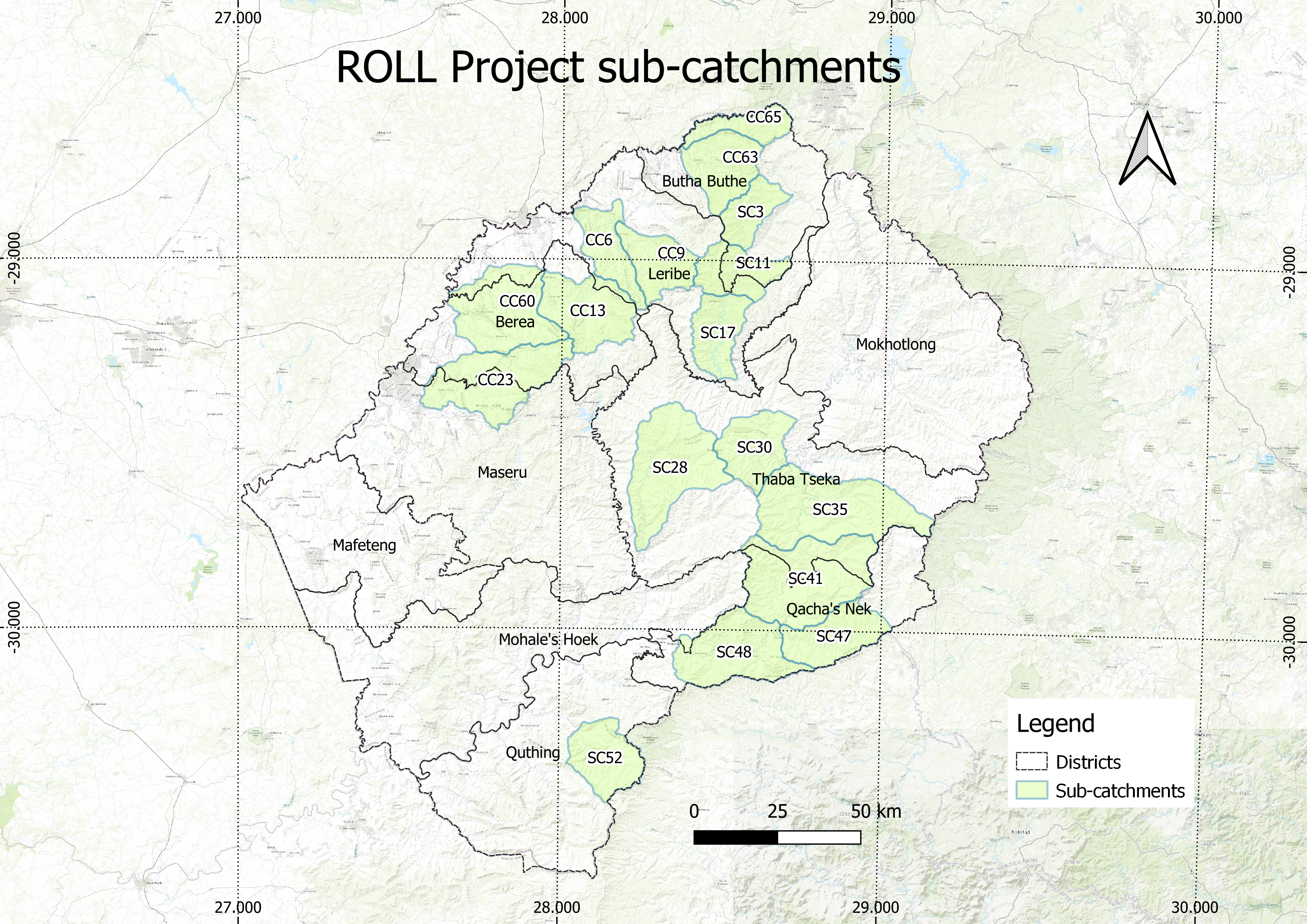
Through close collaboration with ministries, donors, local authorities, and communities, ROLL fosters climate resilience and socio-economic development by mobilizing natural resource user groups and encouraging cooperative, innovative land management practices for lasting environmental and livelihood benefits.
Components
Component A: Regeneration Coalition Facility: Under this component, different interest groups in a landscape will be brought together under the umbrella of a landscape coalition. In all landscapes, it is foreseen that there will be multiple interest groups (large livestock farmers, poor households with limited assets, traditional authorities, etc.), and their usage of natural resources is highly variable, as is their impact on the environment.
Component B: Regeneration Opportunities Fund:: This Fund aims to catalyse investments in the regeneration of landscapes. The Fund will be set up as an efficient and focused mechanism that can continue to function beyond the lifetime of the ROLL project.
Component C: Project Management: This component will facilitate the effective and efficient implementation of components A and B. Its responsibilities include:
ROLL will have important other environmental benefits beyond the targeted focal areas under land degradation. In applying integrated watershed and sustainable land management approaches, the project will equally contribute to the goals of the biodiversity focal area and the synergetic implementation of multiple MEA objectives, particularly SDG 15. ROLL’s landscape approach will indeed mainstream biodiversity concerns across priority sectors and policies and support the restoration of more resilient and biodiverse watershed areas for sustainable use while addressing pressures and drivers for habitat and species protection.